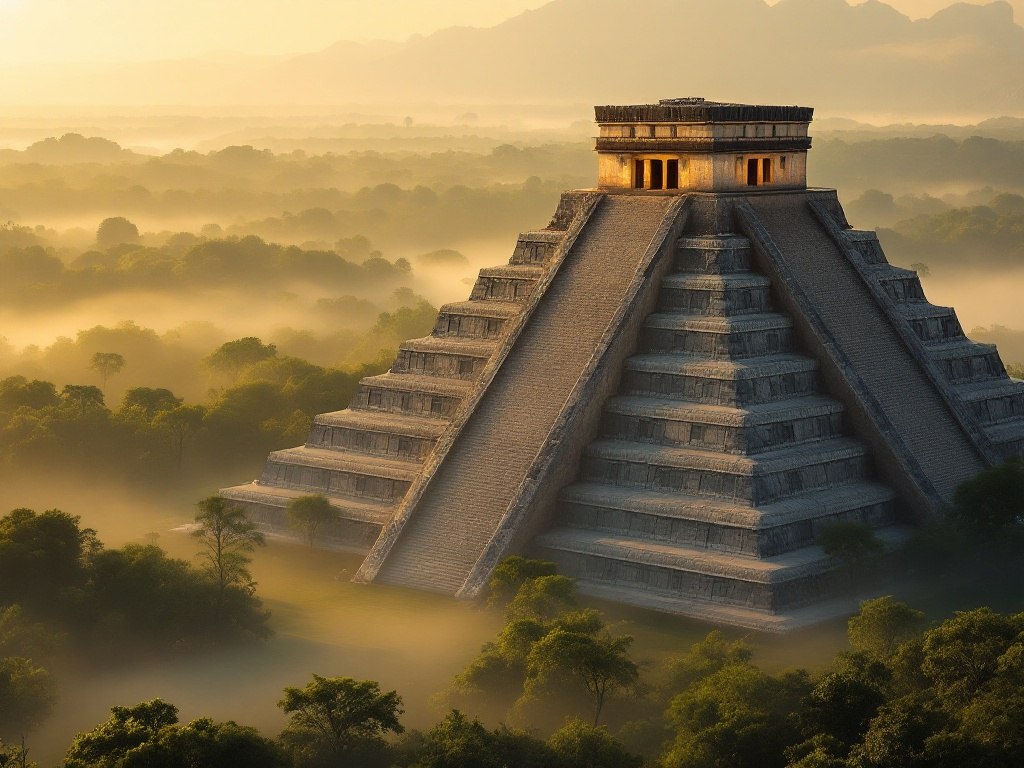
Chichén Itzá
At equinox a serpent of light slithers down Kukulkán's steps — Maya astronomy as living ritual.
✦ Open on the living map — photos, stories & energiesRising from the Yucatán jungle, Chichén Itzá was a major Maya political and ceremonial center between the 8th and 12th centuries. Its most iconic structure, El Castillo, or the Temple of Kukulkán, stands as a precise calendar in stone: four stairways of 91 steps each plus the top platform total 365, mirroring the solar year.
Legends speak of the feathered serpent god Kukulkán, who was said to return from the heavens along these stairs. On the spring and autumn equinoxes, the sun’s rays create the illusion of a serpent slithering down the northern balustrade, a breathtaking demonstration of Maya astronomical mastery that still draws thousands today.
Best time to visit: November to April — dry season with lower humidity and pleasant temperatures around 75-85°F; equinox weeks in March and September are extremely busy with thousands of visitors, while early mornings in January or February offer quieter energy.
✦ Jade — Jade resonates with the sacred cenote offerings and amplifies heart-centered clarity; hold it during equinox sunrise to anchor serpent wisdom into the solar plexus.
✦ Pyrite — Pyrite strengthens solar plexus vitality and mirrors the golden light of the descending serpent; place it on the navel while meditating at El Castillo to boost confidence and manifestation.
✦ Black Obsidian — Black obsidian, long used in Maya rituals, grounds intense energies and reveals hidden truths; carry it through the ball court to release old patterns and receive clear guidance.
✦ Serpentine — Serpentine directly embodies the Kukulkán current; wear or hold it on the pyramid steps to awaken kundalini-like movement and harmonize with the site’s flowing time energies.
For metaphysical, spiritual & entertainment purposes — not medical advice. ✦ crystaloracle.ai