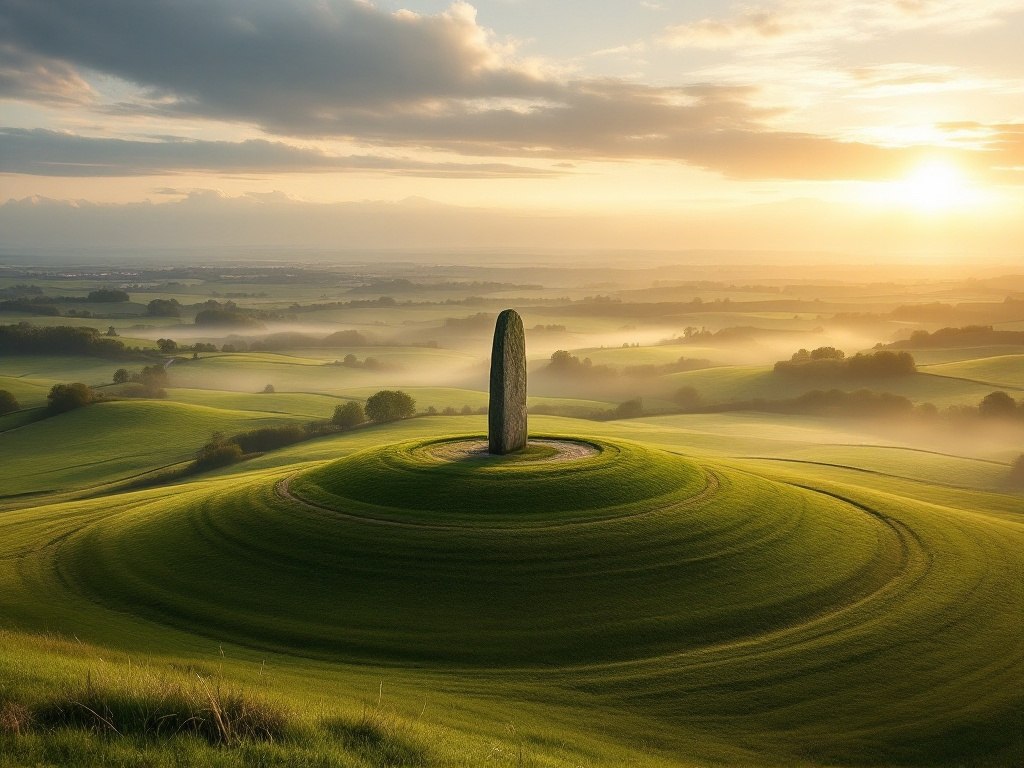
Hill of Tara
The seat of Ireland's High Kings, where the Stone of Destiny was said to cry out for the true ruler.
✦ Open on the living map — photos, stories & energiesPerched on a low ridge in County Meath, the Hill of Tara comprises a series of Neolithic and Iron Age earthworks, including the Mound of the Hostages, the Rath of the Synods, and the great enclosure known as the Royal Enclosure. Archaeological evidence shows continuous ritual use from at least 2500 BCE, making it one of Ireland’s most significant prehistoric ceremonial landscapes rather than a single fortress.
According to medieval texts, Tara was the seat of the Árd Rí, the High King of Ireland, where each new ruler placed a foot upon the Lia Fáil so the stone might roar its approval. Though the stone now stands silent, its weathered quartzite pillar still marks the inauguration place at the center of the complex.
Best time to visit: May to September — mild temperatures and long daylight hours; the site is quietest in April, May, and late September, while July and August bring the largest crowds of tourists and tour buses.
✦ Emerald — Emerald resonates with Tara’s sovereignty and kingship energies; hold it at the Lia Fáil to attune to the stone’s legendary roar and strengthen personal authority.
✦ Clear Quartz — Clear Quartz amplifies the ancestral and earth currents of the site; place it on any mound to record and magnify the site’s memory for later meditation.
✦ Labradorite — Labradorite enhances ancestral connection and hidden sovereignty; carry it while walking the earthworks to receive intuitive messages from the ancient guardians.
✦ Smoky Quartz — Smoky Quartz grounds the powerful earth energy here and transmutes any overwhelming sensations; use it at the base of the Mound of the Hostages for deep stability.
For metaphysical, spiritual & entertainment purposes — not medical advice. ✦ crystaloracle.ai