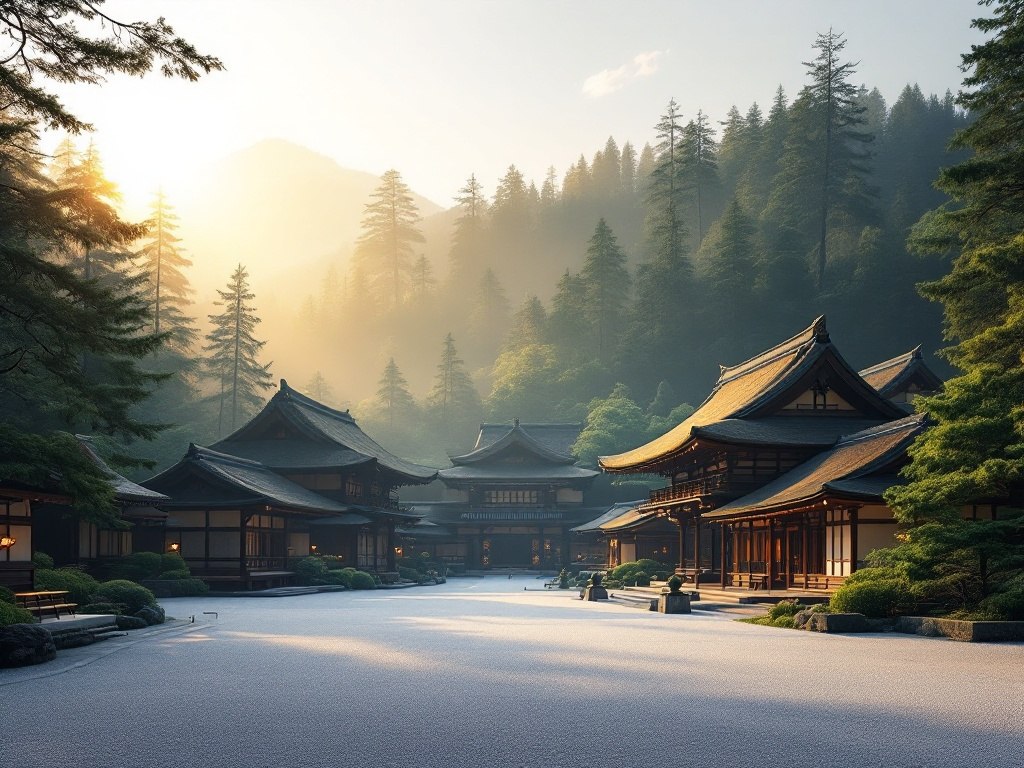
Ise Grand Shrine
Shinto's holiest shrine, rebuilt from fresh cypress every 20 years so the sun goddess always dwells in newness.
✦ Open on the living map — photos, stories & energiesNestled in the misty hills of Mie Prefecture, Ise Grand Shrine comprises two main sanctuaries—the Naiku and Geku—linked by ancient pilgrimage paths through dense cedar groves and along the clear waters of the Isuzu River. For over two millennia this has been the spiritual heart of Japan, home to the sacred mirror said to contain the essence of Amaterasu-Omikami, the sun goddess whose light is believed to illuminate the entire nation.
The shrine’s most extraordinary tradition is the shikinen sengu, the ritual rebuilding of the main sanctuaries every twenty years using only new hinoki cypress, copper, and thatch. This practice, dating back to the seventh century, ensures that the goddess always inhabits a fresh dwelling, embodying the Shinto principle of renewal and the impermanence of all things.
Best time to visit: March–May or October–November — mild temperatures and blooming azaleas or autumn maples enhance the sacred atmosphere; avoid July–August’s oppressive humidity and typhoon risk. The shrine is quietest on weekday mornings outside major festivals, while New Year’s and the October sengu ceremonies bring large crowds.
✦ Clear Quartz — Amplifies the shrine’s solar purity and helps visitors attune to Amaterasu’s light; hold it during prayer to magnify intentions for renewal.
✦ White Opal — Enhances emotional clarity and spiritual openness, resonating with Ise’s cleansing waters and helping release old patterns in the presence of the sun goddess.
✦ Sunstone — Directly channels the shrine’s solar energies, boosting vitality and confidence while visitors stand in the radiant morning light.
✦ Selenite — Supports deep purification and connection to higher realms, ideal for cleansing one’s aura before entering the sacred precincts.
For metaphysical, spiritual & entertainment purposes — not medical advice. ✦ crystaloracle.ai