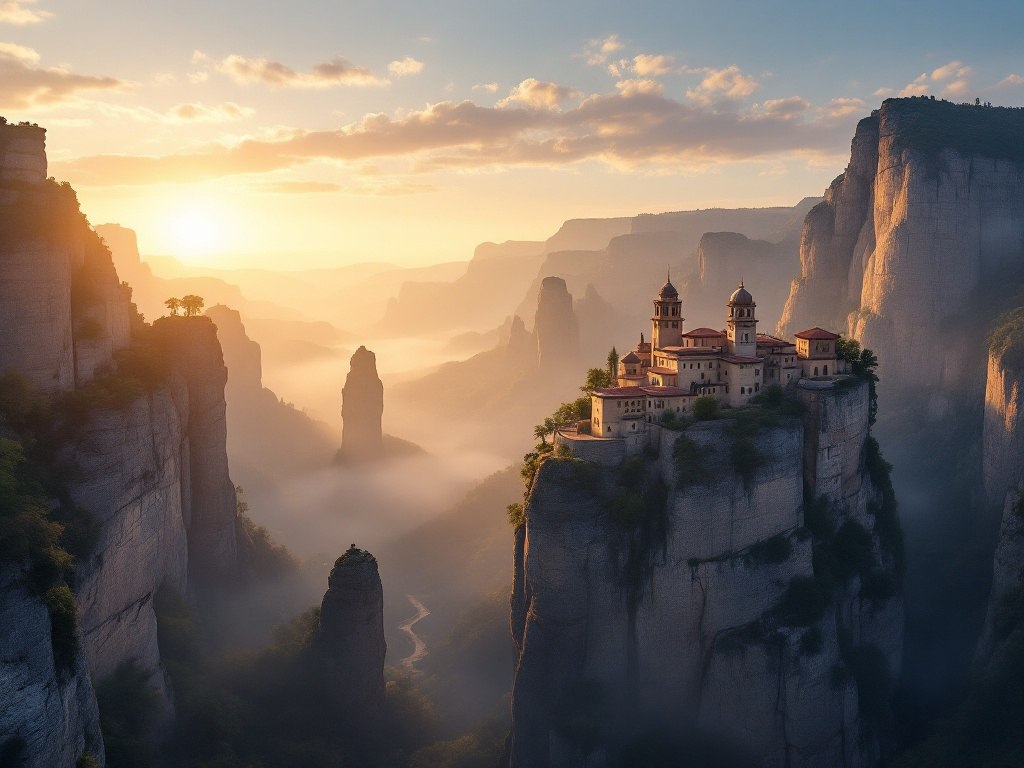
Meteora
Monasteries balanced atop sheer pinnacles of rock — 'suspended in air,' halfway to heaven.
✦ Open on the living map — photos, stories & energiesRising like petrified giants from the green valley of central Greece, the sandstone pillars of Meteora have stood for millions of years, shaped by erosion into sheer, improbable spires. In the fourteenth century, Byzantine monks, fleeing Ottoman raids, scaled these vertical cliffs with ropes and ladders to establish monasteries that would become fortresses of prayer and scholarship.
By the sixteenth century, twenty-four monasteries crowned the pinnacles, their frescoed chapels and wooden balconies clinging to the rock as though they had grown there. Only six remain active today, yet the atmosphere of profound isolation and devotion lingers in every wind-scoured crevice.
Best time to visit: April–May or September–October — mild spring or autumn temperatures with wildflowers or golden light; summer is hot and crowded while winter brings cold winds and occasional closures.
✦ Clear Quartz — Amplifies the site’s ascension frequencies and helps visitors anchor the high, clear energy they receive atop the pillars.
✦ Amethyst — Deepens crown-chakra connection and supports the meditative solitude that Meteora’s monasteries have cultivated for centuries.
✦ Celestite — Enhances the sky and angelic energies felt on the pinnacles, facilitating gentle communication with higher realms during sunrise meditations.
✦ Selenite — Clears the aura and creates a column of light that mirrors the vertical lift of the rock formations, ideal for energy work at the edge of a terrace.
For metaphysical, spiritual & entertainment purposes — not medical advice. ✦ crystaloracle.ai