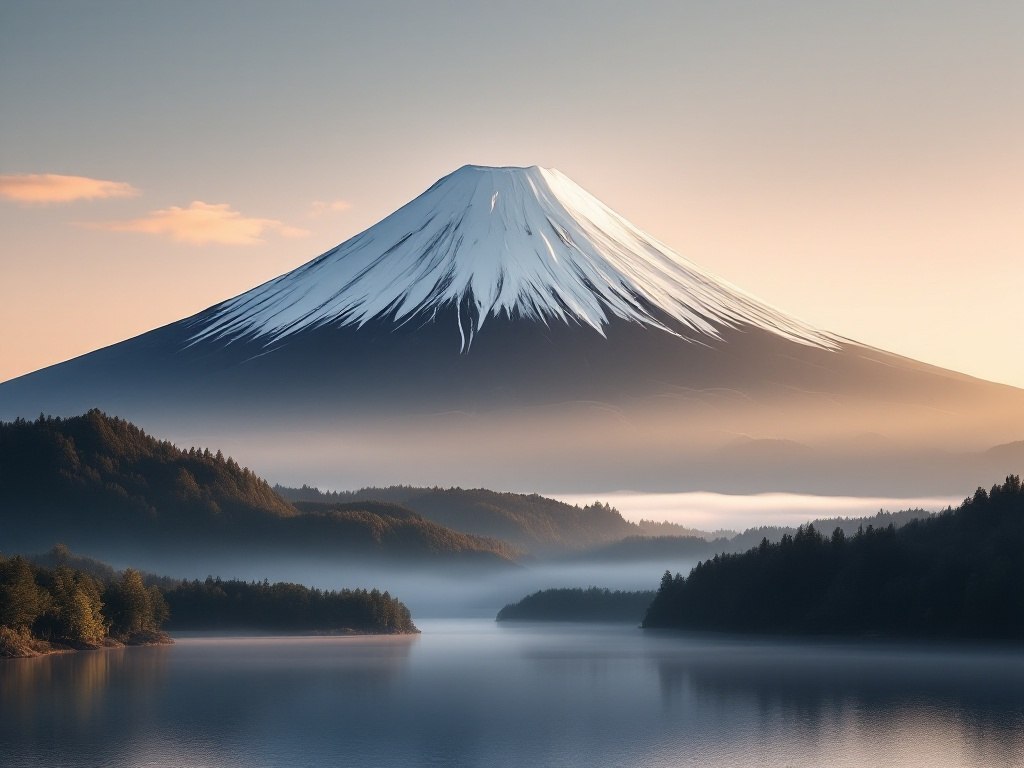
Mount Fuji
A perfect cone the Japanese have climbed as prayer for centuries — clarity made of snow and fire.
✦ Open on the living map — photos, stories & energiesMount Fuji, Japan's highest peak at 3,776 meters, stands as an active stratovolcano whose last eruption occurred in 1707-1708, shaping the landscape with fertile ash that still nourishes surrounding tea fields and forests today.
In Shinto tradition the mountain is the sacred body of the goddess Konohanasakuya-hime, while Buddhist ascetics have long regarded its summit as a gateway to enlightenment, building shrines and performing fire rituals that blend with the hiss of geothermal steam.
Best time to visit: July to early September — clear trails and mild daytime temperatures above the snowline; early July and September are quieter than peak August weekends when thousands of climbers create long queues at the summit.
✦ Clear Quartz — Amplifies Fuji's ascension energy and helps anchor pure intentions during the climb; hold or wear it at the summit to magnify clarity and seal the journey's insights.
✦ White Opal — Resonates with the mountain's sacred stillness and purity, softening emotional edges so visitors can receive higher guidance; meditate with it facing the crater to invite luminous visions.
✦ Selenite — Clears residual density before and after the ascent, aligning perfectly with Fuji's purifying vortex; sweep it over the body at each station hut to maintain energetic lightness.
✦ Celestite — Opens the gateway to ascension and connects climbers with celestial realms said to hover above the peak; place it on the third eye during sunrise meditations at the summit.
For metaphysical, spiritual & entertainment purposes — not medical advice. ✦ crystaloracle.ai