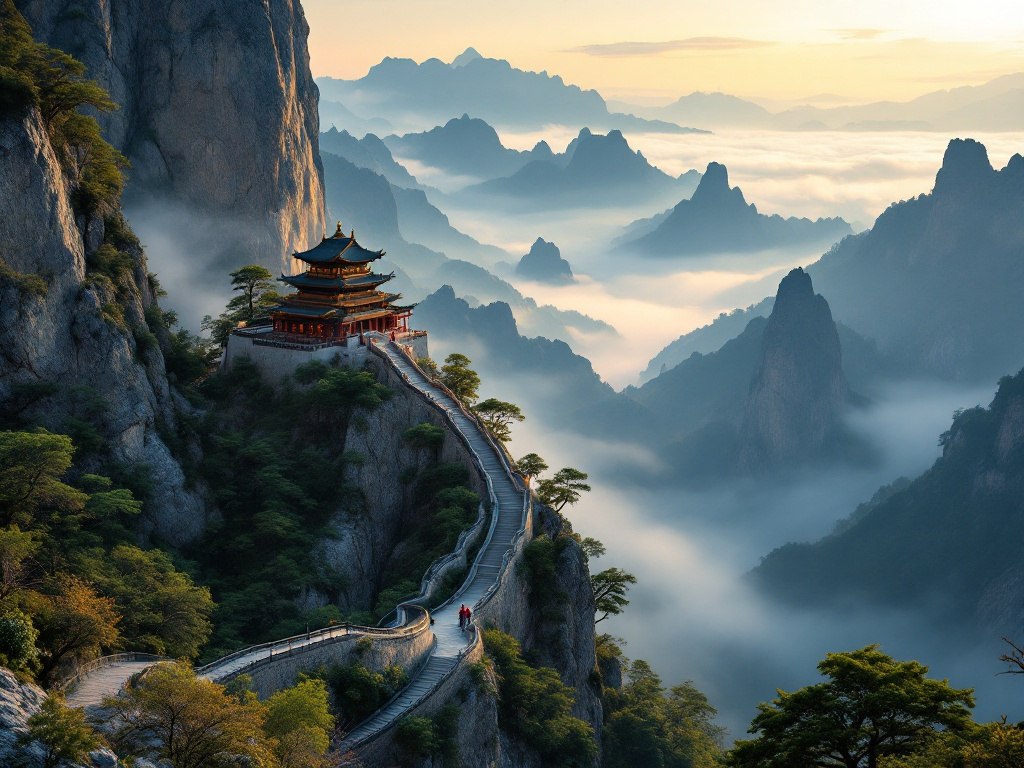
Mount Tai
The most sacred of China's mountains — climbed by emperors to touch heaven and greet the rising sun.
✦ Open on the living map — photos, stories & energiesMount Tai, or Taishan, has anchored Chinese spiritual life for over three thousand years as the easternmost of the Five Great Mountains. Emperors from Qin Shi Huang to the Qing dynasty climbed its slopes to offer sacrifices that would ensure the harmony of heaven and earth, carving inscriptions into its granite faces that still speak of their reverence.
Legends tell of the mountain's birth from the body of the primordial giant Pangu and of immortals who dwell among its cloud-wrapped peaks. The Stairway to Heaven, with its 6,660 steps, is said to mirror the celestial ladder that connects mortal rulers to the Jade Emperor above.
Best time to visit: April–May or September–October — mild temperatures and clearer skies with lower rain risk; avoid July–August heat and winter snow closures; quieter on weekdays outside Chinese national holidays when crowds thin dramatically on the trails.
✦ Jade — Jade resonates with Mount Tai's imperial legacy; carry it to attune to the mountain's sovereign energy and use it during sunrise meditation to anchor heavenly blessings into earthly purpose.
✦ Clear Quartz — Clear Quartz amplifies the mountain's sky and ascent currents; hold it on the summit to magnify intentions and channel the sun's first rays into focused spiritual clarity.
✦ Sunstone — Sunstone aligns with Taishan's solar worship; place it facing east at dawn to draw the emperor-like vitality of the rising sun into personal empowerment.
✦ Lapis Lazuli — Lapis Lazuli connects to the celestial and royal aspects of the peak; wear it while climbing to open the third eye to the mountain's ancient sky wisdom.
For metaphysical, spiritual & entertainment purposes — not medical advice. ✦ crystaloracle.ai