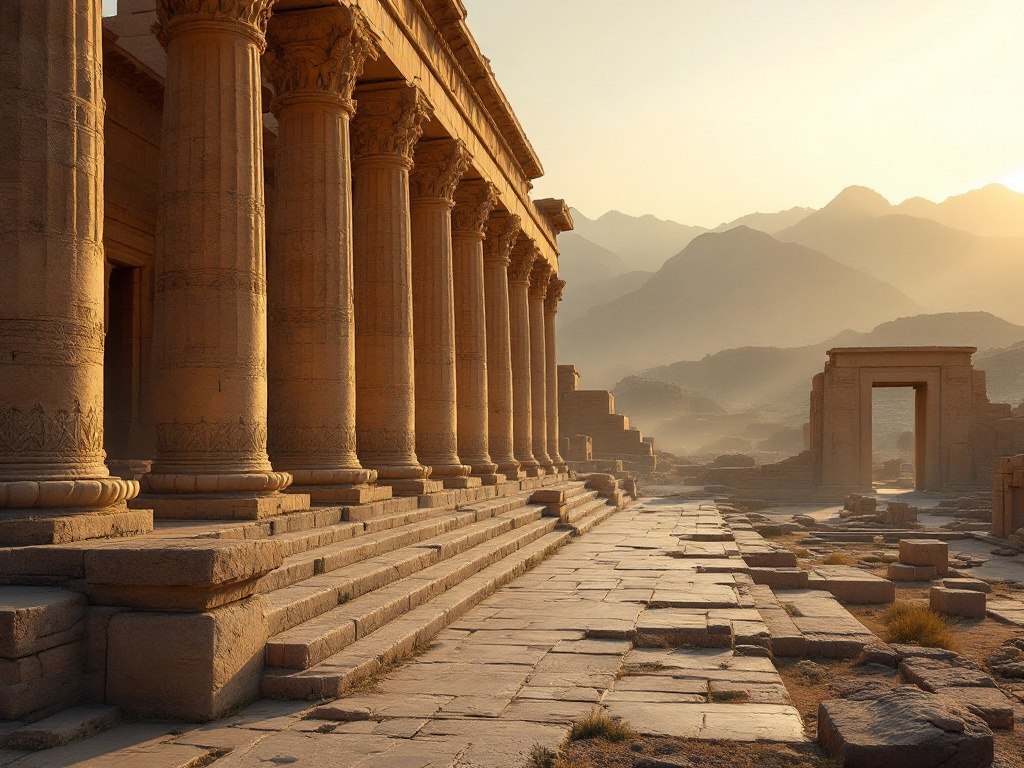
Persepolis
Ceremonial heart of the Persian empire — colossal columns and winged guardians once lit by the eternal Zoroastrian flame.
✦ Open on the living map — photos, stories & energiesPersepolis, located in the Fars province of Iran near modern Shiraz, was founded by Darius the Great around 518 BCE as the ceremonial heart of the Achaemenid Empire. Vast stone terraces, hypostyle halls with fluted columns reaching over twenty meters, and elaborate staircases depicting tribute bearers from across the empire were constructed over decades by Darius, Xerxes, and Artaxerxes. The complex served not as a daily capital but as the stage for Nowruz celebrations and royal audiences, its architecture blending Persian, Median, Egyptian, and Mesopotamian influences into a statement of universal dominion.
Legends speak of the site as a place where the sacred Zoroastrian fire burned eternally in hidden sanctuaries, its flames symbolizing divine kingship and cosmic order. Local lore and travelers’ tales describe the winged genii carved into doorways as guardians of this flame, protecting the legacy of the empire even after Alexander the Great’s forces burned the palaces in 330 BCE. The destruction itself has become part of the mythic narrative, with stories of hidden treasures and the enduring spirit of Persian sovereignty rising from the ashes.
Best time to visit: March to May or September to November — mild spring or autumn temperatures ideal for exploring the open terraces without extreme heat; the site is busiest during Nowruz (late March) and spring holidays, while winter months offer quieter visits though with cooler winds and occasional frost.
✦ Lapis Lazuli — Lapis Lazuli resonates with the royal and ceremonial legacy of Persepolis; carry it to amplify connection to ancient wisdom and use it in meditation at the Apadana to receive messages from the empire’s guardians.
✦ Carnelian — Carnelian embodies the sacred fire once lit at the site; hold it during sunrise rituals to ignite personal power and courage aligned with Zoroastrian vitality.
✦ Turquoise — Turquoise protects and harmonizes the majestic energies of the ruins; wear it while walking the terraces to safeguard your own sovereignty and enhance communication with the site’s spirit.
✦ Citrine — Citrine channels the abundant power and legacy of the Achaemenid kings; place it on an altar overlooking the columns to manifest prosperity and strengthen leadership qualities awakened here.
For metaphysical, spiritual & entertainment purposes — not medical advice. ✦ crystaloracle.ai