Petra
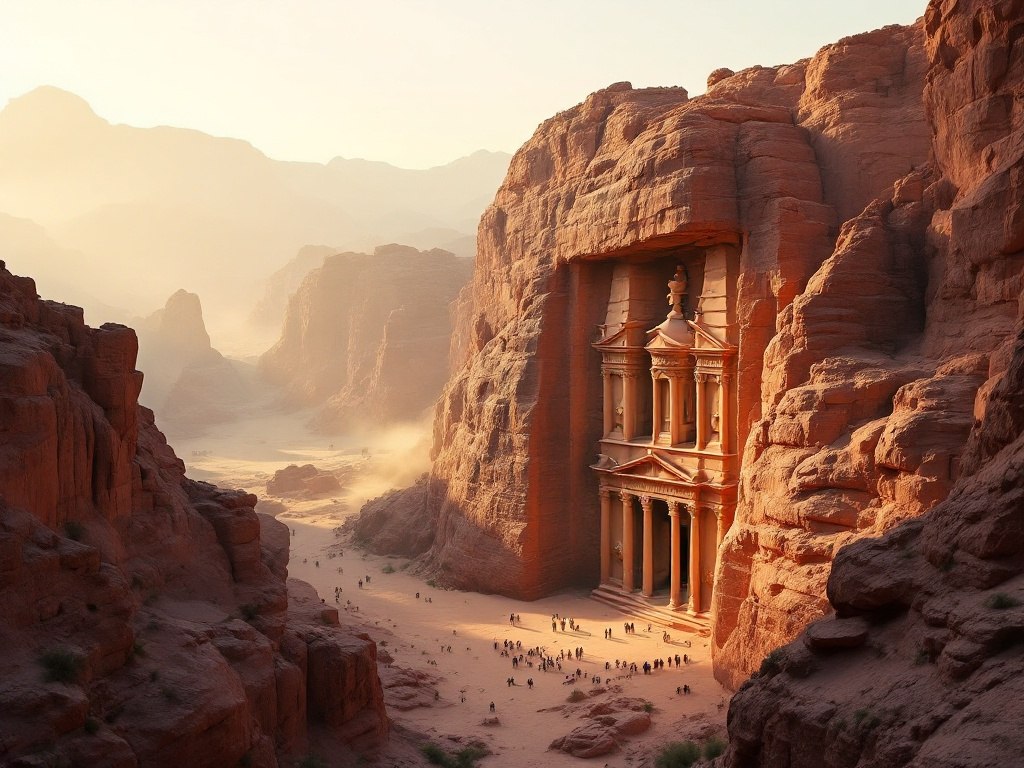
The rose-red city carved into desert cliffs — a temple-front glowing at the end of a narrow canyon.
✦ Open on the living map — photos, stories & energiesPetra was the capital of the Nabataean Kingdom from the 4th century BCE until the 2nd century CE, when its ingenious water systems and position on the incense trade route made it one of the wealthiest cities of the ancient world. The Nabataeans carved temples, tombs, and theaters directly into the rose-colored sandstone cliffs, creating a city that feels grown rather than built.
Legends speak of Petra as a place of hidden treasures and lost knowledge, its Treasury long rumored to hold the wealth of pharaohs or even the Holy Grail. While Hollywood amplified these tales, the real mystery lies in the Nabataeans’ sudden decline after Roman annexation and the city’s gradual burial by sand and time.
Best time to visit: March–May or September–November — mild desert temperatures and clear skies; summer (June–August) brings extreme heat above 40°C/104°F while winter can bring cold nights and occasional flash floods. Crowds are heaviest March–April and October, quieter in early May and late September.
✦ Carnelian — Carnelian’s fiery vitality resonates with Petra’s desert rose stone, helping visitors access courage and creative flow while walking the Siq and standing before the Treasury.
✦ Red Jasper — Red Jasper grounds the body in Petra’s ancient earth energy, supporting stamina during long explorations and deepening connection to the site’s enduring threshold power.
✦ Smoky Quartz — Smoky Quartz clears residual modern static so visitors can attune more fully to Petra’s layered ancient frequencies and protective Mystery.
✦ Black Obsidian — Black Obsidian acts as a mirror for inner truth at this Threshold site, helping release old patterns before entering the sacred heart of the city.
For metaphysical, spiritual & entertainment purposes — not medical advice. ✦ crystaloracle.ai