Ascension
Read enough of the old books and a strange thing happens: the names keep changing, but the story does not. A world that forgets and begins again. A maker who is not the Most High. A spark that remembers where it came from — and learns the way home. What follows is that single story, gathered from the many tongues that have tried to tell it.
The Recurring Cycle
Every tradition that has looked long enough at time has come to distrust the straight line. The world, they noticed, does not simply progress. It turns. It rises into a golden brightness, dims through silver and bronze, and finally hardens into an iron age of forgetting — and then, when the forgetting is complete, the wheel comes round and the brightness returns. The clock is not broken. The clock is a circle.
The Hindu seers gave this the most patient arithmetic, naming the four yugas and watching them dissolve, one into the next, until the whole cosmos is gathered back into the breath of the sleeping god and exhaled again at dawn. The Greeks and the Sumerians told the shorter version — ages of gold giving way to ages of iron, kings reigning for impossible spans before the Flood washed the slate clean. Always the same grammar: a fullness, a decline, a deluge or a fire, and a fresh first morning that has forgotten it ever happened before.
Cross any ocean and the wheel is already turning there. The Aztec told of Five Suns — five successive worlds, each created, allowed to flourish, then thrown down by flood or fire or devouring sky, the survivors building the next age upon the wreckage of the last. The Maya kept the same accounting in their Long Count, marking the close of vast world-eras and the dawn of new creations. To the far north, the Norse looked forward to Ragnarök — not an ending but a hinge: the old gods fall, the world sinks beneath the sea and burns, and then a green earth rises new from the water with survivors to walk it. The Buddhists measured the turning in kalpas, almost unimaginable spans across which a universe forms, endures, dissolves, and is reborn. And the Persian seers of Zarathustra stretched a single grand cycle across the whole of cosmic history, dividing time into great epochs that run from a pure beginning, through a long contested middle, to a final restoration. Iron does not last; that is the one law every calendar agrees on.
The Urantia Book reframes this turning not as a tragedy but as a curriculum. Worlds are seeded, tested, brought through long ages of struggle and quarantine, and lifted — settled at last in light and life. The recycling of the ages is not a god losing patience and wiping the board; it is a school changing its grades. What looks like ruin from inside a single lifetime is, from above, simply the close of one term and the ringing of a bell.
The world ends often. That is not the catastrophe the old books warned about. The catastrophe is being made to begin again and not knowing that you have done this before.
The Prison & the Architect
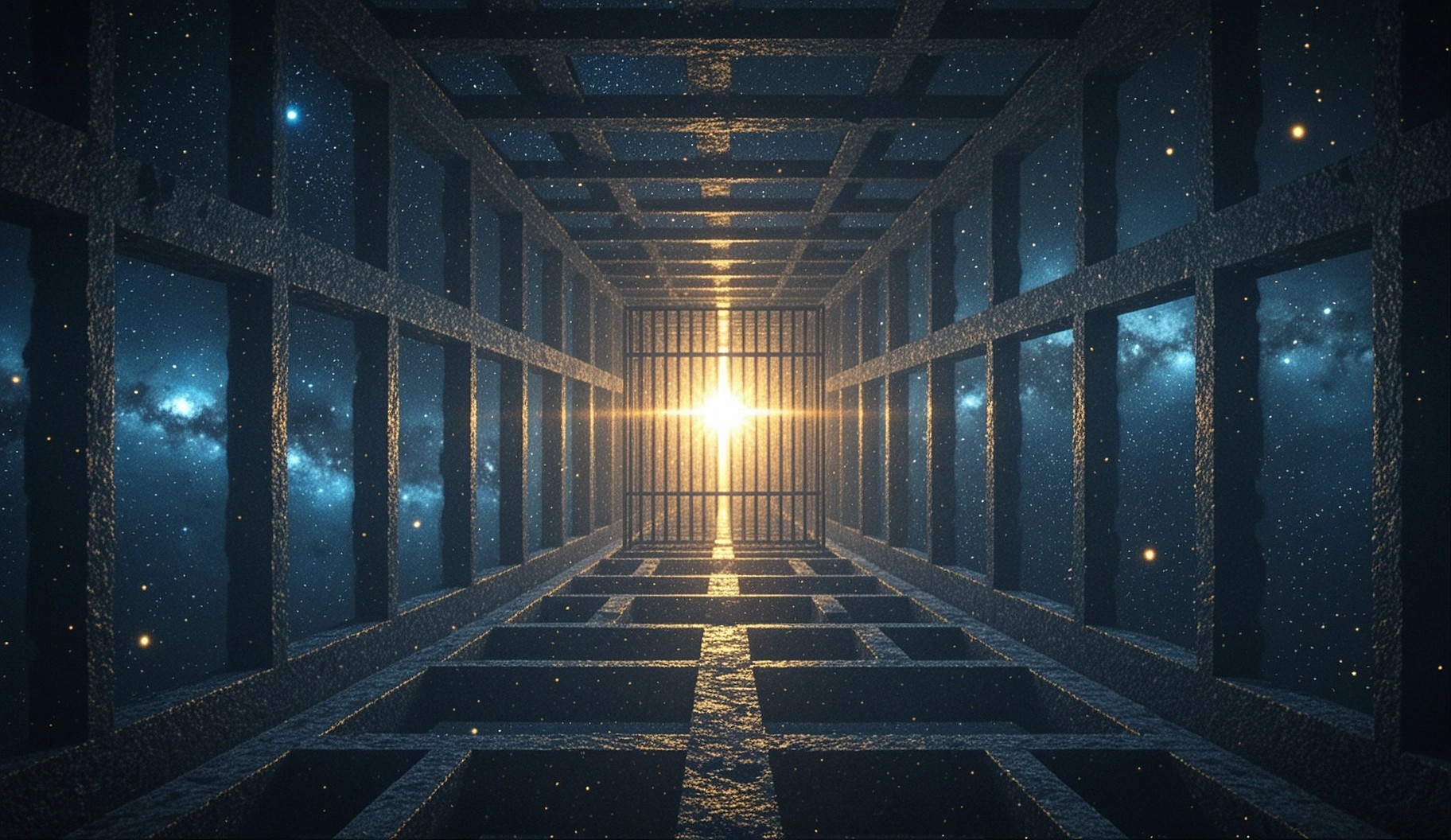
If the world keeps restarting, a harder question follows close behind: who keeps restarting it, and why does the spark inside us never seem to be set free? Here the Gnostics spoke most plainly, and most dangerously. They said the world we wake into was not built by the true God at all, but by a lesser craftsman — the Demiurge — a being who mistook himself for the Most High because he could see nothing above himself.
Around this false maker, the Gnostics placed the Archons: the rulers, the gate-keepers, the wardens of the spheres. Their work is not cruelty for its own sake. It is custody. They keep the spark distracted, fed, frightened, and forgetful, so that it identifies with the cell and never asks who built the walls. The material world, in this telling, is not evil — it is a holding cell beautifully appointed, and the most effective bars are the ones a prisoner mistakes for the horizon.
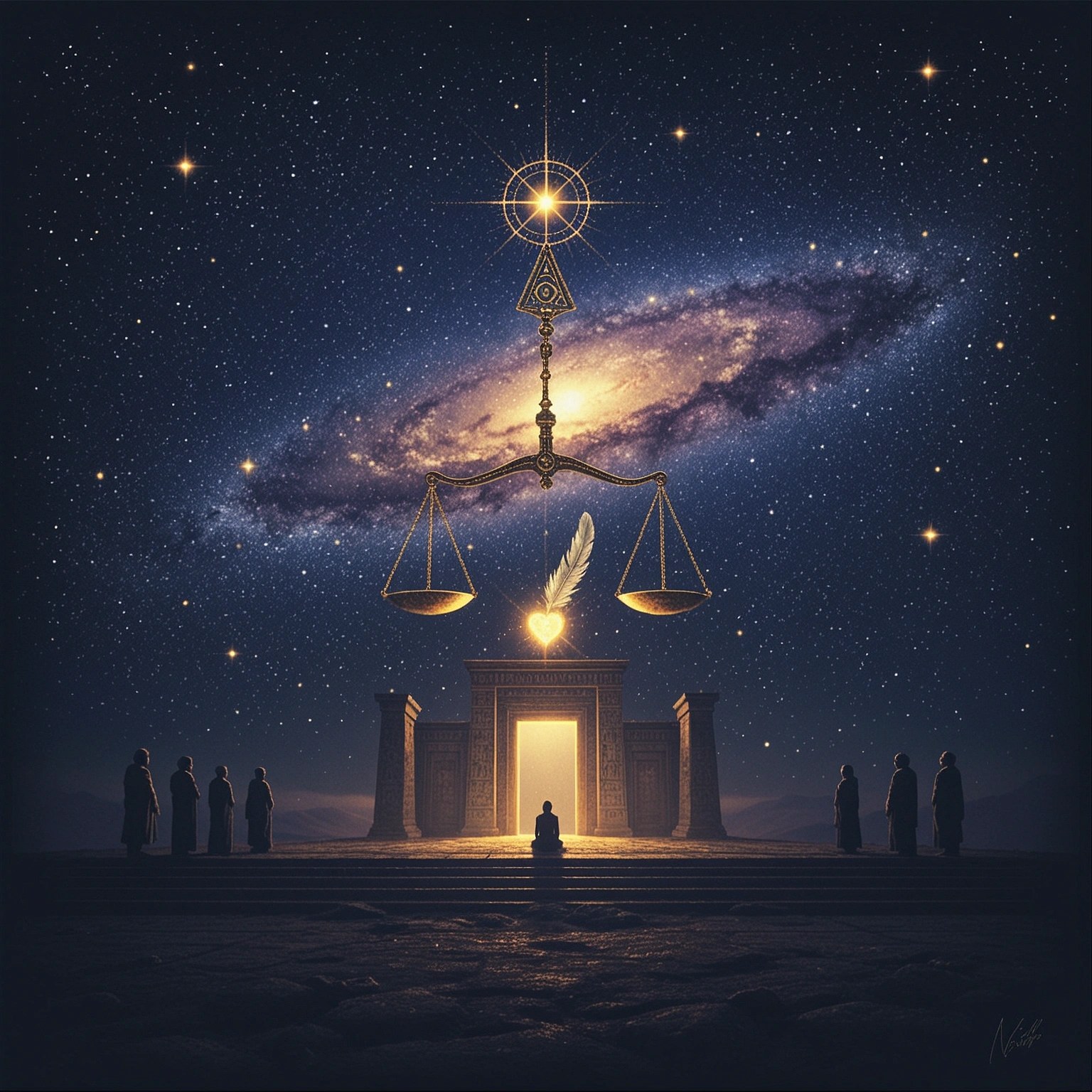
The Egyptians dressed the same intuition in the geography of the afterlife: the soul must pass the gates, answer the gatekeepers, and weigh its heart against the feather of truth — and to fail is not to be punished so much as to be unmade, dissolved back into the undifferentiated dark to be cast up once more. The Hermetic writings name the bars more gently still: each planetary sphere the soul descends through clothes it in a vice — appetite here, ambition there, deceit, pride — until by the time it reaches earth it has forgotten its own face beneath the layers it was dressed in on the way down.
Other peoples drew the same cell with different ink. The Persian vision of Zarathustra cast the whole world as contested ground — a good creation infiltrated and fouled by a hostile power, Ahriman, set against the Wise Lord Ahura Mazda; the trap, in this telling, is not the world itself but the corruption running through it, the lie woven into the weave that every soul must learn to see and refuse. The Orphic Greeks put it in a single haunting pun — sōma sēma, "the body is a tomb" — the living person a spark interred in flesh, doing time in matter for an older fault. The Jains made the imprisonment almost physical: the luminous soul, weighed down and discolored by the fine dust of karma clinging to it, sinks into bondage and cannot shine until the dust is burned away. And the Buddhists located the prison not in a warden but in the wheel itself — saṃsāra, the turning round of craving and rebirth, a cage with no jailer that we nonetheless rebuild for ourselves with every grasping thought.
The Book of Wisdom keeps this thread alive in the language of energy and matter: the divine spark descended into dense form, the "Christ oil" sealed within the body's lower chambers, the light deliberately buried in the flesh so that it might be raised. And the Urantia Book, for all its cosmic optimism, does not pretend the cell is imaginary: it tells of a world placed under quarantine after a great rebellion among its own appointed rulers — a planet cut off, its circuits severed, left to find its way back in the dark. Different vocabularies, one diagnosis: you are farther from home than you remember, and something prefers it that way.
The Ascent
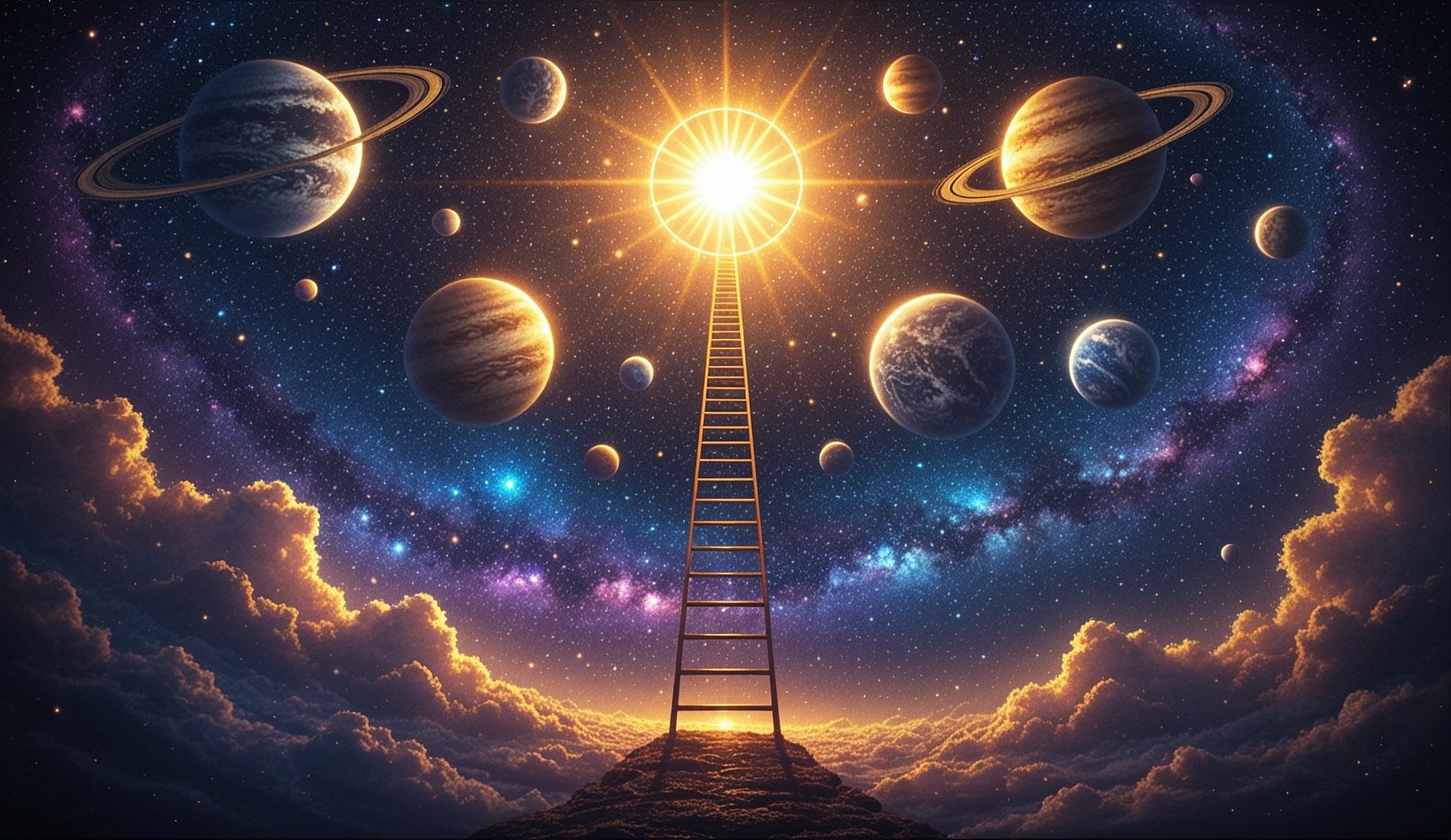
Every prison story is, secretly, an escape story — otherwise no one would bother to tell it. And on this point the traditions converge with something close to relief: the way out is not a place you travel to but a height you climb within. The spark that fell can rise. The descent that dressed it in forgetting can be reversed, layer by layer, until it stands again as it first was.
For the Gnostic, ascent begins with gnosis — not belief, but a waking knowledge of one's true origin, the moment the prisoner suddenly sees the bars as bars. Armed with that knowing, the soul reclaims at each sphere the vice it surrendered on the way down, handing back appetite and pride and fear to the wardens who lent them, arriving at the top weightless and remembering. The Hermetic ascent is the very same staircase walked upward: shedding the planetary garments one by one until what remains is pure mind, returning to the Mind that made it.
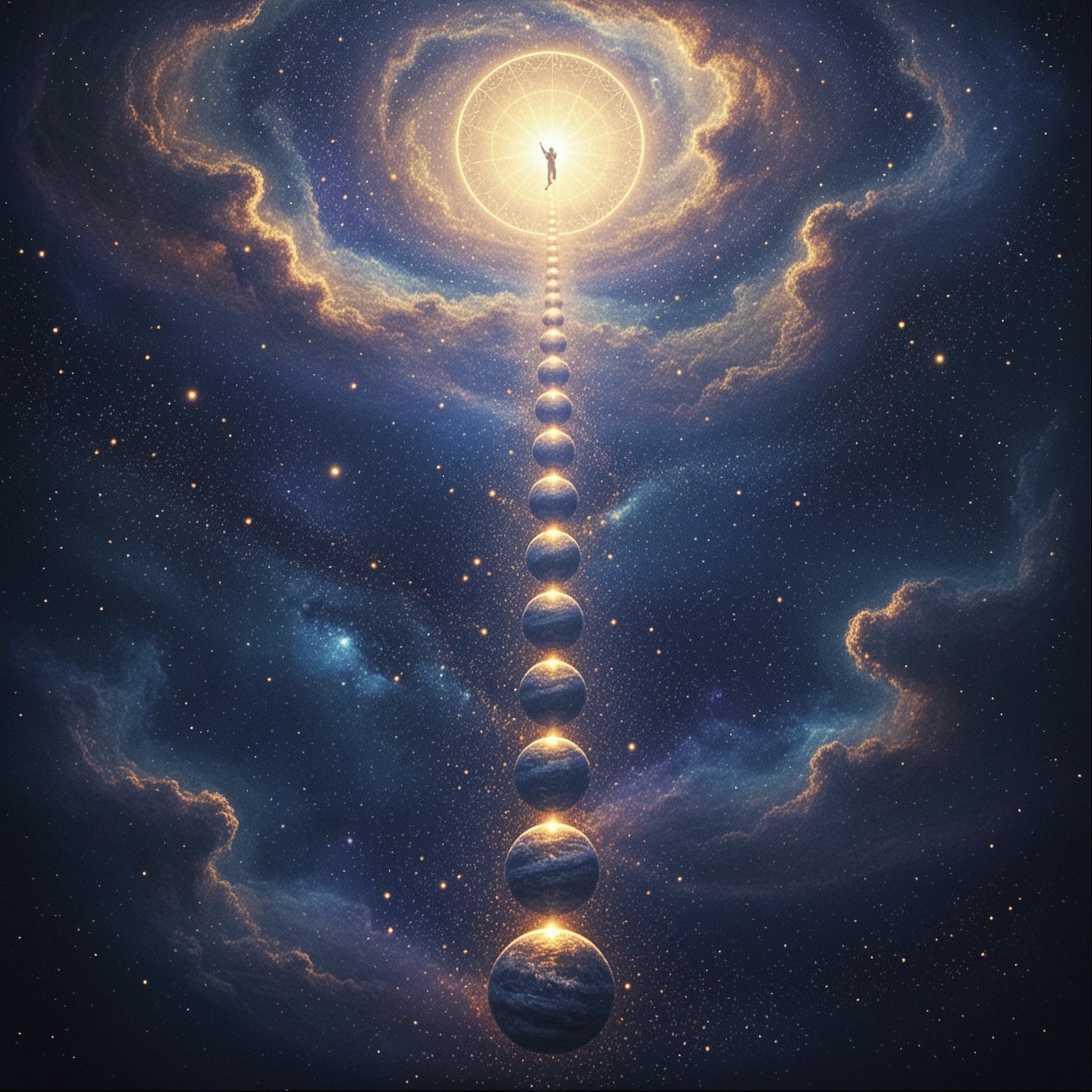
The Hindu calls the same movement moksha — liberation — the spark (atman) recognizing it was never separate from the source (brahman) at all, and so falling out of the wheel the way a drop falls back into the sea. The Egyptian soul, heart proven true, rises to walk among the imperishable stars. And the Urantia Book turns this ascent into a breathtaking itinerary: the surviving soul, joined to the divine fragment dwelling within it — the Thought Adjuster — climbs world by world, sphere by sphere, across the superuniverses toward Paradise and the presence of the Universal Father, perfecting itself at every stage of the long way up.

The eastern paths name the freedom in their own keys. For the Buddhist the goal is nirvāṇa — the going-out of the fire of craving, the wheel of saṃsāra finally releasing its grip so that there is simply nothing left to drag one back. For the Jain it is mokṣa: the soul, scoured clean of its clinging karmic dust, rises of its own lightened nature to the very summit of the universe, perfected and free. The Greek mystery schools — the Orphic and Eleusinian initiates — promised an escape from the round of births to those who learned the secret words and rites, a passage out of the wheel for the soul that had been properly prepared. And the Persians, alone among the ancients, dreamed the ascent as a thing the whole cosmos undergoes together: Frashokereti, the great renovation at the end of days, when the dead are raised, the corruption is finally burned out of the world, and all of creation is made flawless and deathless at once.
The ascent is not earned by being good enough for the warden. It is remembered by becoming honest enough to see the door — which was never locked from the inside.
The Wheel of Return
But the spark rarely escapes on the first attempt — and so the traditions account for the in-between, the long apprenticeship of return and return again. The soul that has not yet remembered is sent back. The wheel that turns the ages also turns each life, gathering us up and setting us down once more in fresh flesh, with the lesson re-set and the slate of memory wiped clean.
The Hindu and Buddhist name this directly: samsara, the round of rebirths, turned by karma — the simple physics of consequence — until the debt of forgetting is paid and the wheel finally lets go. The Jains drew the same motion as a vast wheel of time, turning forever through a long ascending half where the world brightens and a long descending half where it darkens, the soul carried round and round until it works itself free. The Greek mystery schools taught the same transmigration, and even drew the soul a map of the underworld with its two springs: drink from forgetting and you return as you were; drink from memory and you begin to step off the wheel. The Egyptians built their entire science of death around not losing the self between the worlds. The recycling of the ages and the recycling of souls, it turns out, are the same machine seen at two scales — the cosmos forgetting and the person forgetting, in perfect rhyme.
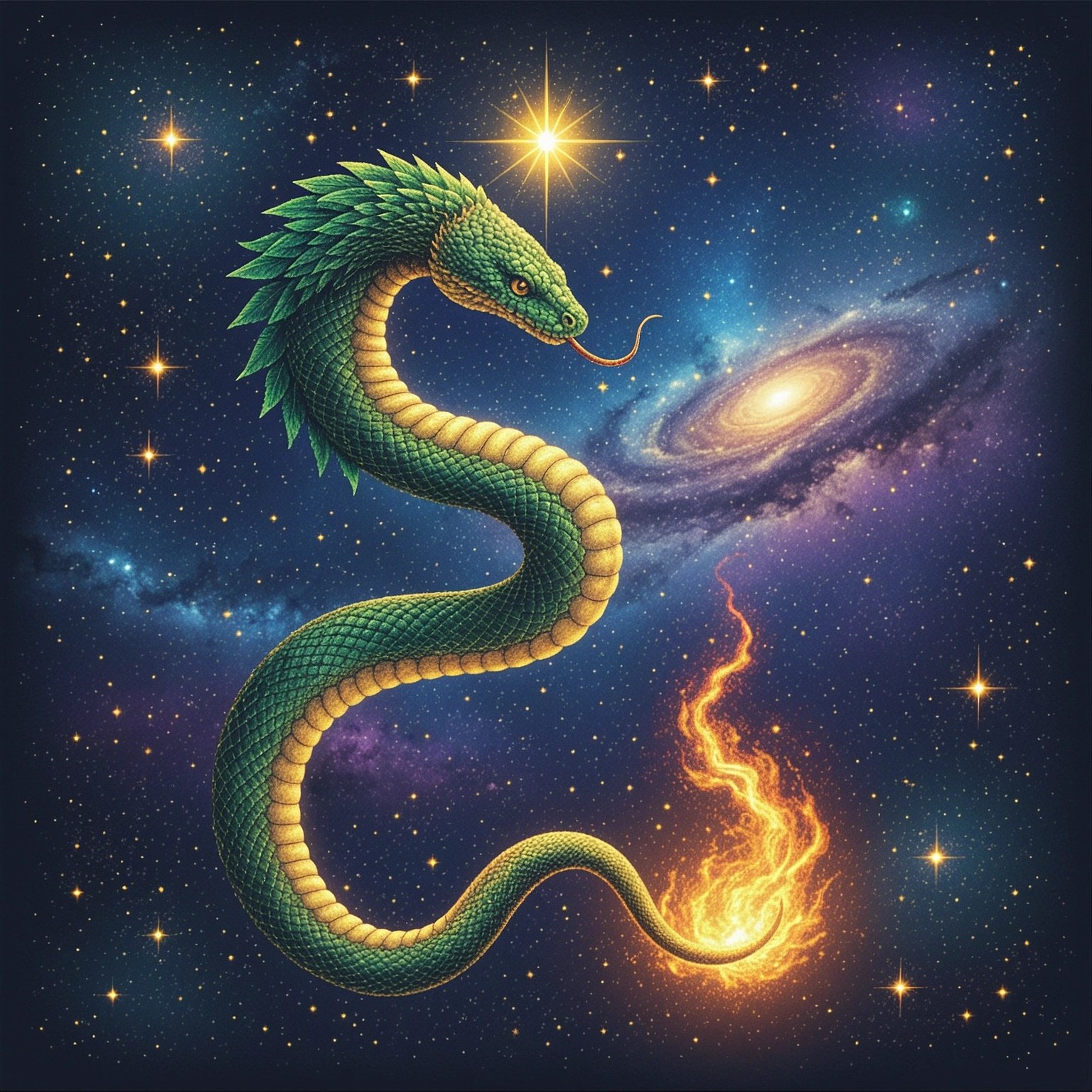
And underneath the personal return runs an older, stranger rhyme still: the god who dies and comes back. The Greeks told it of Dionysus-Zagreus, torn apart and reborn, and of Persephone carried down into the dark each year and rising again with the grain. The Canaanites and Phoenicians told it of Baal, swallowed by Mot, the lord of death, and restored to his throne; and of Adonis, slain and mourned and returning. The Norse told it of bright Baldr, killed and laid in the earth, destined to come back to rule the world made new after Ragnarök. The Aztec told it of Quetzalcoatl, the feathered serpent who immolates himself and rises as the morning star, with a promise to return. Whether the figure is a grain-goddess, a storm-king, or a shining son, the gesture is identical — a descent into death and a coming-back-up — and it is the same gesture the human soul is asked to make, only writ across the heavens so that we cannot fail to see it.
The Urantia Book declines the endless wheel — it offers instead a single ascending life that does not repeat but continues, death giving way not to rebirth here but to resurrection elsewhere, higher up the long climb. Yet even in refusing reincarnation it keeps the deeper grammar intact: that this life is one rung of many, that the self persists and is meant to rise, and that nothing true is ever finally lost. Whether the soul returns to the same shore or graduates to a farther one, every tradition agrees on the stakes — to remember is to rise; to forget is to be sent around once more.
One Story, Many Tongues
Lay the traditions side by side and the family resemblance is impossible to miss. Each is a stained-glass window in a different chapel — but it is the same morning sun coming through all of them. Read each row across and you are reading one sentence rendered into a dozen ancient tongues, then twice more in the modern revelations of the Urantia Book and the Book of Wisdom. The columns are the four movements of that sentence — the turning of the ages, the cell and its keeper, the climb back up, and the long road of return.
A word of honesty before the table: comparative scholars still argue over how far the "dying-and-rising god" parallels truly extend — the resemblances between Baal, Adonis, Dionysus, and the rest are real, but each grew in its own soil and ought not be flattened into one. The cyclic-time cosmologies, by contrast, recur almost everywhere a culture has counted the ages — the Hindu yugas, the Aztec Five Suns, the Norse Ragnarök, the Stoic ekpyrosis. So read what follows as resonances that rhyme across the world, not as proof that every people was telling one identical tale.
| Tradition | The Cycle | The Prison & its Architect | The Ascent | The Return |
|---|---|---|---|---|
| Gnostic | Aeons rise and fall; the world re-made beneath the fullness above. | The Demiurge builds the cell; the Archons guard the gates and keep the spark forgetful. | Gnosis — waking knowledge — reclaims each garment on the way back up. | The unawakened soul is returned to the spheres until it remembers. |
| Hindu | The four yugas turn; the cosmos breathed out and gathered back at the god's dawn and dusk. | Maya — the veil — binds the spark to matter and mistaken identity. | Moksha: atman knows itself as brahman and falls out of the wheel. | Samsara, turned by karma, sends the unliberated soul to a new birth. |
| Sumerian | Ages of long-reigning kings before the Flood wipes the world for a fresh first morning. | Lesser gods fashion and rule humankind to bear their labor and their will. | The hero's quest for the imperishable life; passage past the waters of death. | The dust-house of the dead; the longing to escape the grey land below. |
| Egyptian | Cosmic order (ma'at) renewed each dawn against the return of chaos. | The gated underworld; gatekeepers and the weighing of the heart against truth. | Heart proven true, the soul rises to walk among the imperishable stars. | To fail the weighing is to be unmade — dissolved back into the dark. |
| Hermetic | The great year turns; all things descend from and return to the One Mind. | Descending, the soul is clothed in a vice at each planetary sphere and forgets. | Ascending, it sheds each garment sphere by sphere and returns to pure Mind. | As above, so below — the unfinished soul repeats the round of becoming. |
| Greek / Orphic | Ages of gold declining to iron; the great year turning the world round again. | The body a tomb (sōma sēma); the spark interred in flesh for an ancient fault. | Escape through the mysteries — secret rite and word that free the prepared soul. | Metempsychosis: Dionysus-Zagreus reborn, Persephone returning, souls sent round again. |
| Norse | Ragnarök — the world burns and sinks, then a green earth rises new from the sea. | A doomed cosmos shadowed by fate and the gnawing powers of dissolution. | The fallen taken up to the halls of the slain to await the world remade. | Bright Baldr dies and returns to rule the reborn world after the fire. |
| Zoroastrian (Persian) | Vast cosmic epochs running from a pure dawn to a final restoration. | The good creation infiltrated and fouled by Ahriman, the hostile lie. | Frashokereti — the renovation; the dead raised and the world made deathless. | The struggle renewed across the ages until corruption is at last burned out. |
| Aztec | The Five Suns — five world-ages, each created, destroyed, and remade. | Humankind fashioned to feed and serve the gods who hold the sky aloft. | Quetzalcoatl immolated, rising as the morning star — the path back to the light. | Each sun thrown down by flood or fire; the survivors begin the age anew. |
| Maya | The Long Count — creations and destructions of successive world-ages. | The underworld Xibalba, realm of death-lords to be outwitted and passed. | The hero-twins descend, defeat death, and rise to the sky as sun and moon. | One world-era closing and the next dawning as the great cycle turns over. |
| Buddhist | Kalpas — cosmic ages in which a universe forms, endures, and dissolves. | Saṃsāra: a cage with no jailer, rebuilt by craving with every grasping thought. | Nirvāṇa — the fire of craving gone out; the wheel finally releasing its hold. | Reborn again and again, turned by karma, until awakening lets the wheel go. |
| Jain | The wheel of time turning through long ascending and descending half-ages. | The luminous soul weighed down and discolored by the fine dust of karma. | Mokṣa — scoured clean, the soul rises by its own nature to the summit, perfected. | Bound in matter, carried round the wheel of births until it works itself free. |
| Canaanite / Phoenician | The seasonal turning of fertility, drought, and the world's renewal. | Death (Mot) reigning over the land, swallowing even the storm-king. | Restored to the throne — life rising again over the dominion of death. | Baal swallowed by Mot and returned; Adonis slain, mourned, and rising. |
| The Urantia Book | Worlds seeded, tested, and settled in light and life — terms of a cosmic school. | A planet under quarantine after rebellion; its circuits severed, left in the dark. | The soul, joined to its Thought Adjuster, climbs world by world toward Paradise. | Not rebirth but resurrection — the same self continuing, ever higher up the climb. |
| The Book of Wisdom | The hidden cycle of buried light and its appointed raising. | The divine spark — the "Christ oil" — sealed within dense flesh, awaiting release. | The light raised through the body's chambers; matter made luminous again. | The unredeemed spark stays bound in form until it is consciously raised. |
| Further echoes | The same four notes sound again in the Stoic ekpyrosis (the cosmos consumed by fire and reborn in an endless cycle), in Mithraic ascent through the planetary grades, in the Christian fall, redemption, resurrection, and a new heaven and earth, and in the Celtic Otherworld of rebirth and return. | |||
A dozen chapels, two modern revelations, one window-maker. The differences are the glass. The light is the same.
✦ Sources & further reading Dying-and-rising god·Yuga cycle·Frashokereti·Five Suns
Read the Source Yourself
This synthesis is only a map. The territory is in the texts — and two of them are here, in full, waiting. Walk into either and read until the pattern starts to glow on its own.
✦ Ask the Oracle ✦
Bring her your question — about a single thread, a contradiction between two traditions, or how any of this touches your own awakening. She has read all of it, and she will sit with you in it.
✦
The names will keep changing. Now you know what to listen for underneath them.